
Our Bulk Domain Authority (DA) & Page Authority (PA) Checker Tool helps you instantly evaluate up to 1000s of URLs at once using live metrics from Moz’s official Link Explorer API. Perfect for SEOs, webmasters, and digital marketers who need fast, accurate authority insights at scale.
-
Live Moz API Data
-
Up to 1000 URLs
-
Fast & Accurate
-
Export & Share
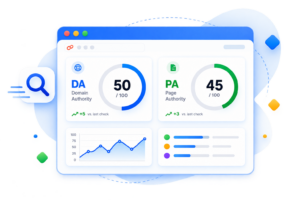
- DA: Domain Authority
- PA: Page Authority
- Spam Score (SS): 1%-30% (🟩Low), 31%-60% (🟨Medium), 61%-100% (🟥High), -1 or N/A (⬛Unknown). Low is better
- Total Backlinks (TB): Number of external pages linking to URL
- Quality Backlinks (QB): Number of Dofollow backlinks
Need Quality Backlinks to Increaes Your DA?
Get high-quality guest posts on 40,000+ real websites across all niches.
Boost rankings, traffic, and authority with GuestPostLinks.net
Domain Authority Checker
Domain Authority Checker allows you to analyze up to 1000 URLs at once using Moz’s official authority metrics. Built for SEOs, agencies, publishers, and digital marketers, it delivers fast, accurate authority insights to support link-building, competitor research, and domain quality assessment.
It provides instant Domain Authority, Page Authority, and Spam Score insights to help you evaluate website strength, identify high-quality link opportunities, and perform fast, reliable SEO analysis with reliable, data-backed results. The tool requires no registration and provides Moz-based results you can trust.
Why Use a DA PA Checker?
Using a DA PA Checker helps you quickly understand the overall website authority and ranking potential of any domain or page. These metrics, powered by Moz, allow SEOs to compare competitors, qualify link-building opportunities, and evaluate the credibility of websites before engaging with them.
A bulk checker is especially useful when you need to analyze multiple URLs at once—saving time and ensuring consistent, data-backed SEO decisions.
Key Benefits of Using a DA PA Checker
- Evaluate Website Quality Instantly
Assess the strength of a site’s backlink profile through Moz’s Domain Authority (DA), Page Authority (PA), Spam Score (SS), Total Backlinks (TB) and Quality Backlinks (QB) metrics. - Identify High-Value Link Opportunities
Compare domains and select trustworthy sites for outreach, digital PR, guest posting, or partnership campaigns. - Avoid Low-Quality or Risky Sites
Use Spam Score to spot potentially harmful domains and protect your backlink profile. - Analyze Competitors at Scale
Quickly benchmark multiple domains to understand how your site stacks up in terms of authority and link strength. - Make Data-Driven SEO Decisions
DA and PA offer a reliable, standardized way to assess ranking potential—helping you prioritize efforts effectively.
How the Bulk DA PA Checker Works
Our Bulk DA PA Checker uses Moz’s Link Explorer API to retrieve real-time Domain Authority (DA), Page Authority (PA), and Spam Score metrics for every URL you enter. The tool processes up to 1000 URLs at once, enabling large-scale authority checks to be fast, accurate, and efficient.
By leveraging Moz’s industry-leading link index, the tool provides trustworthy measurements based on backlink profile strength, linking root domains, and other proprietary authority signals used in Moz’s ranking models.
How It Works (Step-by-Step)
- Paste URLs into the Input Box
Enter up to 1000 URLs, each on a separate line. The tool validates entries automatically to ensure clean and accurate results. - Click the “Check Authority” Button
Once submitted, the tool connects to Moz’s API and retrieves fresh DA, PA, and Spam Score data for each domain or page. - View Instant Authority Results
Results appear in a clear, organized table showing DA, PA, Spam Score, and other helpful authority indicators for quick comparison and analysis. - Export Your Data for Reporting
Download your results in CSV format for audits, link prospecting, client reporting, or ongoing SEO tracking.
Who Can Benefit from the Bulk DA PA Checker?
The Bulk DA PA Checker is designed for anyone who needs fast, reliable authority insights across multiple domains or URLs. Whether you’re analyzing competitors, qualifying link-building prospects, or reviewing a website’s trustworthiness, this tool helps you make informed decisions backed by Moz’s industry-standard authority metrics.
Ideal for SEO Professionals & Agencies
SEO specialists can quickly evaluate domain quality, compare competitors, and choose high-value link-building targets. Agencies benefit from faster audits, streamlined reporting, and the ability to analyze large URL lists in seconds.
Perfect for Content & Digital Marketers
Content teams and digital marketers use DA and PA scores to identify authoritative websites for partnerships, outreach, guest posting, and digital PR. The tool ensures every opportunity aligns with your brand’s quality standards.
Useful for Bloggers & Publishers
Bloggers and niche site owners can assess domain strength, find trustworthy linking opportunities, and monitor the authority growth of their own blogs over time.
Valuable for Businesses & In-House SEO Teams
Brands with internal marketing teams can review competitor websites, evaluate backlink prospects, and prioritize SEO tasks using dependable authority metrics from Moz’s Link Explorer.
Helpful for Affiliate Marketers & Link Builders
Evaluate the authority and risk of potential linking sites to ensure you focus on domains that boost long-term SEO performance and avoid harmful or spammy sources.
What Is Domain Authority (DA)?
Domain Authority (DA) is a predictive metric created by Moz. It estimates how well an entire website (domain) is likely to perform in organic search results (SERPs). DA is scored on a 1–100 scale, with higher scores indicating a stronger link profile and a higher likelihood of performing well in search visibility compared to competing domains.
Unlike Google’s ranking factors, DA is not used by Google; it is a comparative metric that helps SEOs assess a domain’s relative authority and competitiveness within its industry.
Key Characteristics of Domain Authority
- ✅ DA is based on Link Profile Strength — Moz calculates DA using signals such as the number of quality backlinks, linking root domains, and patterns within a domain’s overall link structure.
- 📊 DA uses a logarithmic scale; Moz calculates DA using signals such as the number of quality backlinks, linking root domains, and patterns within a domain’s overall link structure.
- 🔁 DA is not static (fluctuates over time) — Moz updates link index data regularly. Gaining or losing backlinks or changes in Moz’s index size may impact your DA score, even without changes to your website.
- 🔎 DA is a comparative metric — Domain Authority is not an absolute measure of ranking power. It’s most useful when comparing your domain against competitors in your niche.
Why Domain Authority Matters
- Helps identify strong or weak domains during competitor research
- Useful for evaluating websites during link-building campaigns
- Assists marketers in qualifying guest posting and outreach opportunities
- Supports SEO audits with a clear authority benchmark
- Indicates long-term link profile strength and site trustworthiness
What Is Page Authority (PA)?
Page Authority (PA) is a ranking predictor developed by Moz that estimates how well an individual webpage (URL) is likely to perform in organic search results. Like Domain Authority, PA is scored on a 1–100 scale, with higher scores reflecting a stronger backlink profile and greater potential to rank.
PA focuses exclusively on page-level authority signals rather than domain-wide strength, making it valuable for identifying high-performing pages, prioritizing content optimization, and evaluating link-building targets.
Key Characteristics of Page Authority
1. PA Relies on Link-Based Signals
PA is calculated using Moz’s machine-learning model, which evaluates the quality and quantity of inbound links to a specific page. It does not consider page content or keywords directly.
2. PA Scores Are Comparative, Not Absolute
A PA score is best used to compare one page against others in the same niche to understand relative ranking potential.
3. PA Fluctuates with Link Index Updates
Because PA is link-dependent, scores may change when pages gain or lose backlinks or when Moz updates its link index.
4. PA Helps Prioritize SEO Efforts
Pages with higher PA often have stronger link equity and ranking potential, making them ideal candidates for internal linking, content expansion, or promotional strategies.
Why Page Authority Matters
- Helps identify high-value pages during audits
- Assists in selecting link-building targets
- Shows which pages contribute most to overall domain authority
- Guides internal linking and content optimization strategies
- Provides a benchmark for monitoring page-level SEO progress
How Are DA and PA Calculated?
Domain Authority (DA) and Page Authority (PA) are both calculated using Moz’s machine-learning models that evaluate a wide range of link-based signals. While Moz does not publicly reveal the full algorithm, they confirm that DA and PA are built primarily on the strength, quality, and patterns of a site’s backlink profile.
While the exact calculation is private, Moz discloses that major factors include:
- Number of inbound and outbound links
- Number of linking root domains (unique domains linking in)
- Quality and relevance of linking domains
- Link trust metrics (e.g. MozRank, MozTrust)
- Diversity of the link profile — avoiding over-concentration of links from few domains
Both metrics use a 1–100 logarithmic scale, meaning it becomes progressively harder to increase scores at higher levels (e.g., improving from 20→30 is much easier than 70→80).
DA vs. PA – Comparison Table
| Feature / Metric | Domain Authority (DA) | Page Authority (PA) |
|---|---|---|
| What It Measures | Overall authority of an entire domain or subdomain | Authority and ranking potential of a single webpage |
| Score Range | 1–100 | 1–100 |
| Primary Factors | Total domain-wide link profile: backlinks, linking root domains, trust signals | Link profile for the specific page: inbound links, linking domains |
| Best For | Comparing domains, evaluating backlink prospects, analyzing competitors | Prioritizing page-level SEO, identifying strong content assets, guiding internal linking |
| How It’s Used | Evaluate domain strength for link building and competitive research | Determine which pages have highest ranking potential and link equity |
| Frequency of Change | Changes when domain links are gained/lost or when Moz updates index | Changes when page-specific link profile changes or when Moz updates index |
| Role in SEO | Helps estimate domain competitiveness (not a Google ranking factor) | Helps assess page competitiveness (not a Google ranking factor) |
These metrics do not directly impact Google rankings but are widely used by marketers for competitor analysis, link-building strategies, and domain evaluation.
💡 Pro Tip: High DA does not guarantee ranking but indicates a website’s credibility and link profile strength.
For more details: Domain Authority (DA) vs Page Authority (PA) – What’s The Difference?
How to Use the Bulk DA PA Checker
Using the Bulk DA PA Checker is simple, fast, and requires no registration. The tool analyzes up to 1000 URLs simultaneously using real-time data from Moz’s Link Explorer API, providing instant insights into Domain Authority, Page Authority, and Spam Score.
Follow these quick steps to run your authority analysis:
1. Paste Your URLs Into the Input Box
Enter up to 1000 URLs, each on a separate line. The tool automatically validates each URL to ensure accurate results.
2. Click the “Check Authority” Button
Once submitted, the tool connects to Moz’s API and begins analyzing the DA, PA, and Spam Score for every entered domain or page.
3. View Your Results Instantly
A clean, easy-to-read table displays Domain Authority, Page Authority, Spam Score, and other SEO metrics like TB (Total Backlinks) and QB (Quality Backlinks).
4. Export Your Data for Further Analysis
Download your results as a CSV, PDF, or Excel file for SEO reporting, audits, link-building research, competitor analysis, or performance tracking.
How to Increase Domain and Page Authority Score?
Improving your Domain Authority (DA) and Page Authority (PA) requires consistent, high-quality SEO practices that strengthen your site’s backlink profile and overall trustworthiness. Since both metrics are powered by Moz’s link-based models, the most effective way to increase your scores is to earn credible, relevant backlinks and maintain a healthy, authoritative website.
1. Earn High-Quality Backlinks from Authoritative Websites
High-quality backlinks are crucial for improving your DA and PA. Focus on earning links from reputable and authoritative websites. These links act as votes of confidence for your content. Avoid buying low-quality, spammy links or engaging in link schemes, as these can lead to penalties from search engines.
Actionable steps:
- Create link-worthy content (guides, research, tools, data studies)
- Pitch guest posts to authoritative sites
- Leverage digital PR and outreach campaigns
- Build partnerships with trusted publishers.
2. Optimize Your Content Quality and Topical Authority
Creating high-quality, unique content is essential for improving your site’s authority. Content optimization involves using relevant keywords, optimizing images, and ensuring that your content is easy to read and valuable to your audience. High-quality content naturally earns backlinks and strengthens page-level authority.
Actionable steps:
- Publish detailed, helpful, original content
- Update outdated articles to maintain relevance
- Add expert insights, data, and examples
- Optimize title tags, headers, and on-page structure
3. Improve Internal Linking
Internal links help search engines crawl your site more effectively and distribute page authority across your site. This can enhance the overall SEO of your website.
Actionable Steps:
- Link Strategically: Use internal links to connect relevant content throughout your site.
- Anchor Text: Use descriptive and keyword-rich anchor text for internal links.
- Siloing: Group related content together to create topic clusters.
4. Maintain a Clean and Trustworthy Link Profile
Toxic Backlinks from spammy or low-quality websites can harm your DA and PA. Regularly audit your backlink profile to identify and disavow harmful links that could negatively impact your scores.
Actionable steps:
- Utilize tools like Moz’s Link Explorer to monitor your backlink profile regularly.
- Use Google’s Disavow Tool to disassociate your site from harmful backlinks if necessary
- Remove low-quality links acquired unintentionally
- Avoid link schemes, paid link networks, or automated link building
5. Improve Website Structure, Speed and User Experience
Search engines favor websites that provide a good user experience. Ensure your site is mobile-friendly, loads quickly, and offers a seamless browsing experience.
Actionable Steps:
- Mobile Optimization: Make sure your site is responsive and works well on all devices.
- Page Speed: Improve loading times by optimizing images, leveraging browser caching, and minimizing JavaScript.
- Clean Design: Ensure your site’s design is clean, intuitive, and easy to navigate.
By following these strategies, you can significantly improve your site’s Domain Authority and Page Authority, thereby enhancing its overall search engine ranking and visibility.
Does Domain Authority Affect SEO?
Domain Authority (DA) does not directly affect SEO or Google rankings. DA is a third-party metric created by Moz to predict how competitive a domain may be in search results based on the strength of its backlink profile. While DA itself is not a ranking factor, the elements that influence DA, such as high-quality backlinks and a strong link profile, are important for SEO.
In other words, DA is a useful indicator, not a ranking signal.
DA Does Not Influence:
- Google rankings
- Search engine algorithms
- How Google crawls or indexes a website
- Automatic ranking boosts
Google has publicly confirmed multiple times that it does not use DA or PA in its ranking systems.
DA Does Help You Understand:
- How strong your site’s link profile is
- How competitive your domain is compared to others
- Whether a site is a good backlink target
- How much authority your website has gained over time
- Which domains may require more SEO and link-building work
DA is one of the most widely used comparative metrics in SEO for competitive analysis, link prospecting, and authority benchmarking.
What Is a Good Domain Authority (DA) Score?
A “good” Domain Authority (DA) score depends entirely on your industry, niche, and competition. DA is a comparative metric, meaning its value comes from how your domain performs relative to other websites—not from the number itself. In general, higher DA scores indicate stronger backlink profiles, but a low score can still be competitive in less saturated industries.
To better understand the meaning of various DA scores and their implications, refer to the following table:
| DA Score Range | Interpretation |
|---|---|
| 0–20 | Low authority (common for new or small sites) |
| 21–40 | Moderate authority; competitive in niche markets |
| 41–60 | Strong authority; well-established backlink profile |
| 61–80 | High authority; influential websites with strong link equity |
| 81–100 | Very high authority; major brands and leading publishers |
These ranges are not ranking guarantees, but they help categorize domain strength during competitor benchmarking and link evaluation.
Why DA Is Relative, Not Absolute
DA is designed to help you answer:
- “How does my domain compare to others in my industry?”
- “Is this website a good link-building target?”
- “Is my site gaining authority over time?”
Two important insights:
1. A DA of 25 may be excellent in a niche market
For example, niche blogs or local service providers often outrank larger sites despite having lower DA scores, because relevance and content quality matter more.
2. A DA of 50 may be average in a competitive industry
Highly saturated industries (marketing, finance, SaaS) naturally have higher DA baselines.
How to Identify a Good DA for Your Website
Instead of looking for a universal “good” number, compare your DA to:
- Your top-ranking competitors
- Competitor backlink profiles
- Websites appearing on page 1 for your target keywords
- Link prospects you’re considering for outreach
A good DA score is one that helps you compete effectively within your target search landscape.
What Is Spam Score and Why Is It Important?
Spam Score is a metric developed by Moz that estimates the likelihood that a domain may be associated with spam-like behavior based on patterns found in penalized or low-quality websites. Spam Score is expressed as a percentage (1%–100%), with higher percentages indicating greater risk.
While Spam Score is not a Google ranking factor, it is a valuable indicator for evaluating backlink quality, assessing domain trustworthiness, and preventing harmful SEO practices.
Think of the Spam Score as a game score where lower scores are better. Here’s a breakdown of how it works:
| Spam Score Range | Risk Level | Meaning |
|---|---|---|
| 1% – 30% | Low Risk | Domain is unlikely to be spammy |
| 31% – 60% | Moderate Risk | Some spam-like signals present; review recommended |
| 61% – 100% | High Risk | Strong correlation with spam; investigate before linking |
How Moz Calculates Spam Score
Spam Score is based on 27 signals commonly found among domains penalized or deindexed by Google. These “spam flags” do not guarantee a site is harmful—they simply show patterns of similarity.
Examples of spam-related indicators include:
- Very low number of referring domains
- Use of certain TLDs associated with spam (e.g., .info, .biz)
- Weak or thin content
- High ratio of external links to content
- Lack of branded search presence
- Over-optimized anchor text patterns
- Poor website structure or lack of HTTPS
Moz uses machine-learning models to determine how many flags a site matches and calculates a probability score.
Why Spam Score Matters for SEO
1. Helps Identify Risky Backlinks
High-Spam-Score domains may harm your link profile if they link to you.
2. Protects Your Site’s Authority
Disavowing or removing links from spammy domains reduces long-term SEO risks.
3. Improves Link Prospecting Decisions
Before pursuing a backlink, checking Spam Score ensures you’re targeting trustworthy sites.
4. Supports Cleaner, Safer SEO Practices
Avoiding spam-like environments helps maintain credibility in Google’s algorithms.
🎯 How to Handle High Spam Score Domains
- Audit your backlink profile regularly
- Evaluate links from domains scoring above 60%
- Remove or disavow harmful backlinks
- Focus on acquiring links from trusted, authoritative sites
- Strengthen your own site’s trust signals (HTTPS, quality content, brand mentions)
Spam Score does not affect Google rankings directly, but it is a powerful quality-control metric. Use it to evaluate backlink safety, screen potential link opportunities, and maintain a healthy, trustworthy website.
Frequently Asked Questions (FAQs)
Domain Authority (DA) is a Moz metric that predicts how likely a website is to rank in search results based on its backlink profile strength. DA is scored from 1 to 100 and is best used for comparing domains, evaluating link opportunities, and benchmarking SEO competitiveness, not as a Google ranking factor.
Page Authority (PA) estimates the ranking potential of an individual webpage URL. Also scored from 1 to 100, PA is calculated using link signals from Moz’s index. It helps SEOs identify strong pages, prioritize optimization, and compare URLs, but like DA, it is not used by Google for rankings.
Yes, the Bulk DA PA Checker is completely free. You can analyze up to 100 URLs for free, while 1000 URLs as a paid user at once, and receive instant Domain Authority, Page Authority, and Spam Score results. No registration, credit card, or account setup is required.
DA is a reliable comparative metric when evaluating domains within the same niche. Its accuracy depends on Moz’s link index size and refresh frequency. DA should not be interpreted as an absolute measure of ranking power but as an indicator of backlink profile strength.
No. Google does not use Domain Authority or Page Authority as ranking factors. These metrics are created by Moz to help SEOs estimate ranking potential based on link profile strength. They serve as comparative indicators, not direct inputs to Google’s algorithms.
Moz updates DA and PA whenever new link data is processed in the Moz Link Explorer index. This can lead to fluctuations, even if your site hasn’t changed. Score changes reflect adjustments in Moz’s index size, lost or gained links, and algorithm refinements.
DA may drop due to lost backlinks, weaker referring domains, changes in Moz’s index size, improved competitors, or link profile shifts. Because DA is comparative, your score can change even if your own website remains unchanged.
You can raise DA by earning high-quality backlinks, creating link-worthy content, improving internal linking, fixing toxic backlinks, and maintaining a trustworthy site. Since DA is calculated from link signals, long-term authority growth depends on sustained, high-value link acquisition.
Generally, a higher DA suggests more substantial ranking potential, but context matters. DA should be compared within your industry or niche, not across unrelated verticals. A DA of 30 may be competitive in one niche but weak in another. Always use DA for relative comparisons.
A good DA depends on your industry and competitors. Large sites often score 60+, mid-range sites fall between 30–50, and newer sites may score under 20. The best DA score is one that matches or exceeds your direct competitors in search results.
Spam Score is a Moz metric (1%–100%) that predicts how likely a domain may exhibit spam-like characteristics. High Spam Scores may indicate risky backlinks or untrustworthy sites. While not a Google ranking factor, it is useful for evaluating backlink quality and ensuring a clean link profile.

 No products in the cart.
